
From Code to Prompts: Rethinking Version Control for AI
What breaks when prompts aren’t managed

Most AI teams don’t break production with bad models.
They break it with invisible prompt changes.
Someone tweaks a sentence.
Accuracy drops.
No one knows why.
That’s not an AI problem.
That’s a DevOps failure.
AI teams version code.
Their version of infrastructure.
They version data.
But the most critical logic in the system - the prompt - is often copied, pasted, and “improved” with zero discipline.
That’s why AI systems feel fragile.
And why teams can’t explain regressions.
This post is about prompt versioning - what it is, why it’s mandatory, and how serious AI teams actually do it.
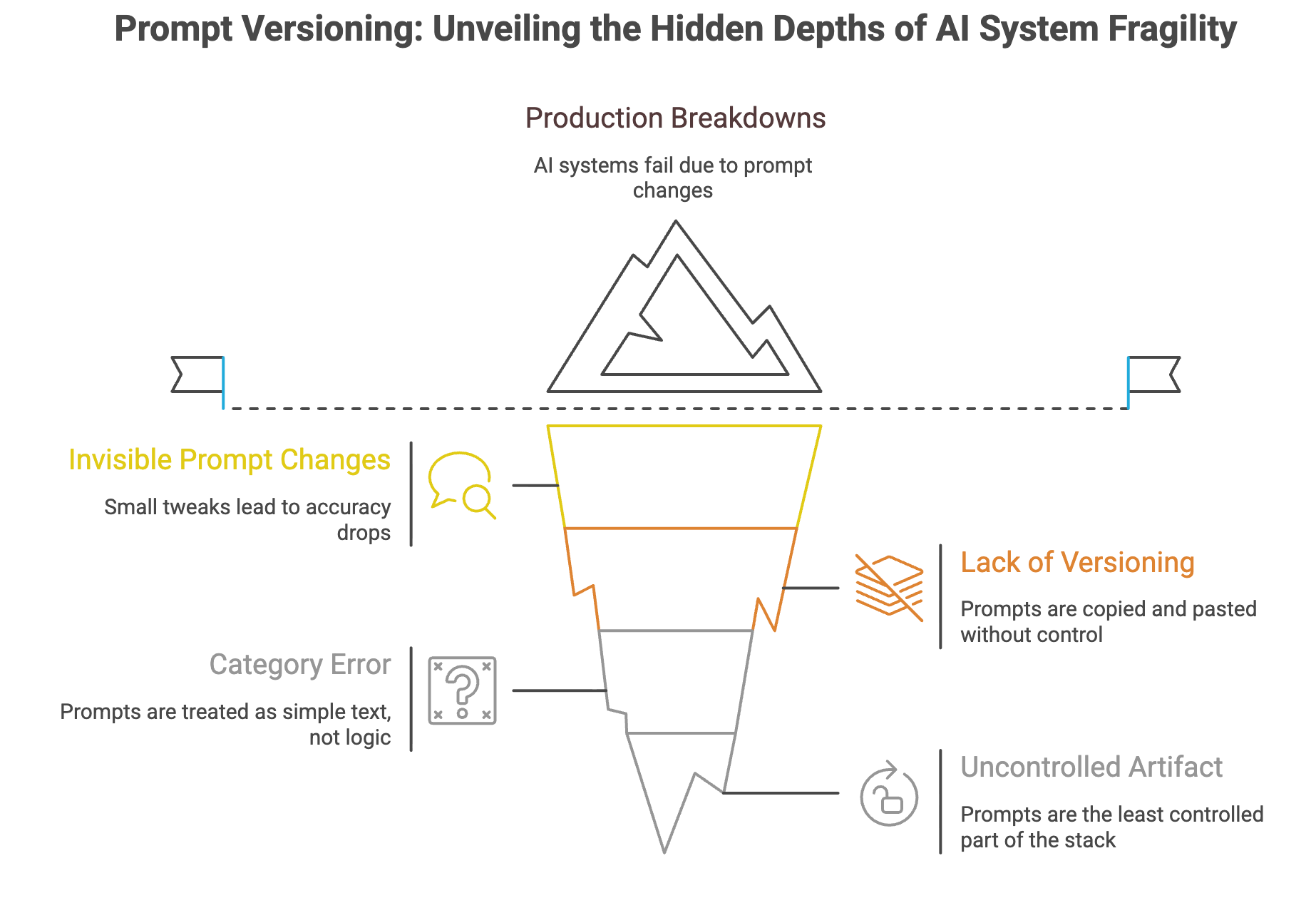
Why Prompts Are Not “Just Text”
Most teams treat prompts as:
strings
configuration
glue code
That is a category error.
A prompt defines:
system behavior
reasoning style
safety boundaries
output structure
failure modes
In AI systems, prompts are executable logic.
Changing a prompt is closer to changing:
a pricing rule
a security policy
a business workflow
Then editing the copy.
And yet prompts are often the least controlled artifact in the stack.
The Real Reason AI Systems Feel Unstable
Here’s the pattern every AI team experiences:
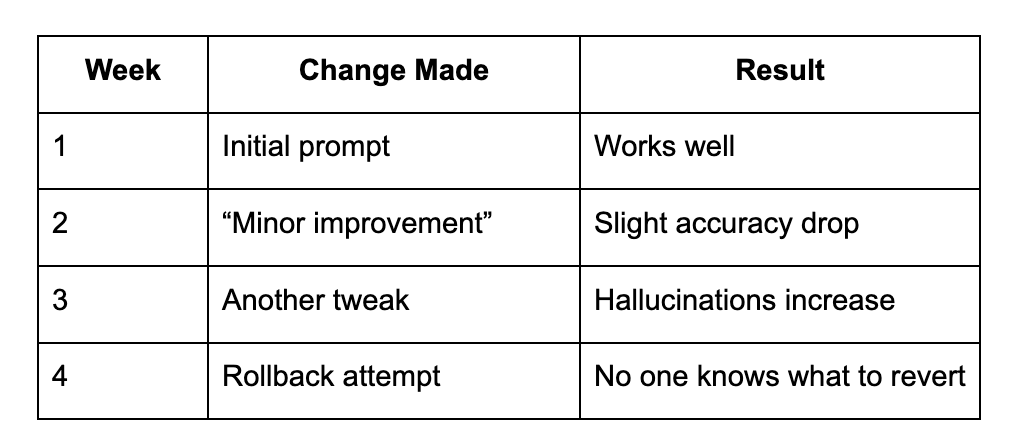
No model change.
No infra change.
No data change.
Only prompt drift.
Without versioning:
regressions are invisible
experiments are irreversible
debugging becomes guesswork
What Prompt Versioning Actually Means
Prompt versioning is not:
adding comments
saving prompts in Notion
naming files prompt_v2_final_final.txt
Prompt versioning means:
Treating prompts as first-class, versioned, testable, rollbackable artifacts — just like code.
That requires:
structure
diffs
ownership
evaluation
release discipline
The Anatomy of a Production Prompt (What Teams Miss)
A real prompt is not a paragraph.
It’s a composite system.
Example: Structured Prompt Layout
prompt_id: invoice_summarizer
version: v1.3.2
owner: payments_team
purpose: Summarize invoice data accurately
model: gpt-4.1
[System]
You are a financial analysis assistant.
[Constraints]
- Do not invent numbers
- Use retrieved data only
- If data is missing, say “Not available”
[Reasoning]
Think step-by-step before answering.
[Output Format]
{
“summary”: “”,
“total_amount”: 0,
“risk_flags”: []
}
[Failure Behavior]
If confidence < 0.7, ask for clarification.
Every section has behavioral implications.
Without structure, versioning is meaningless.
Why Small Prompt Changes Cause Big Failures
Prompts interact with models non-linearly.
Example changes that cause regressions:
moving a constraint lower in the prompt
adding “be concise”
changing output order
adding one example
modifying tone instructions
Example: Seemingly Harmless Edit
- “Do not invent numbers”
+ “Avoid inventing numbers”
Result:
hallucination rate ↑
confidence ↑
detection ↓
Without versioning + evals, this looks like “model randomness.”
It’s not.
It’s an untracked logic change.
Prompt Versioning vs Code Versioning
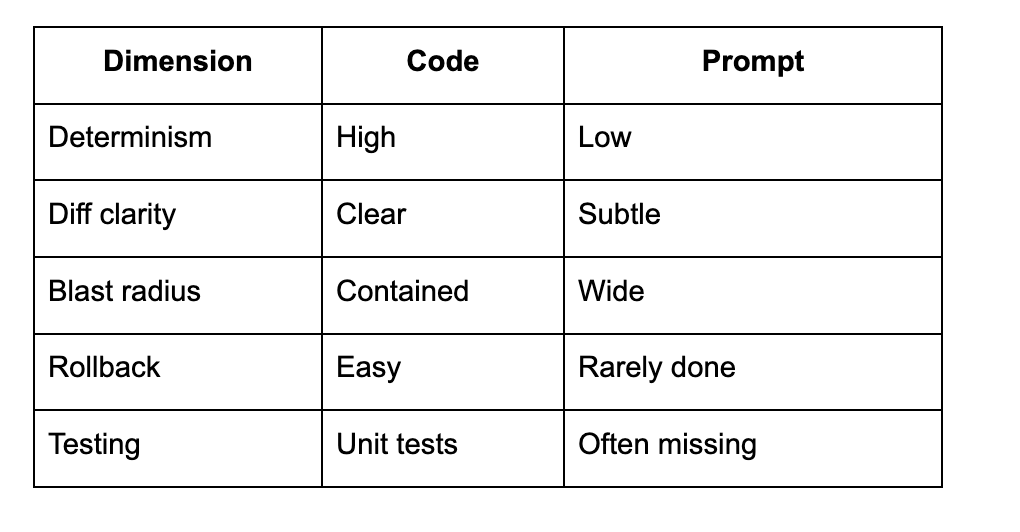
This makes versioning prompts more important than code, not less.
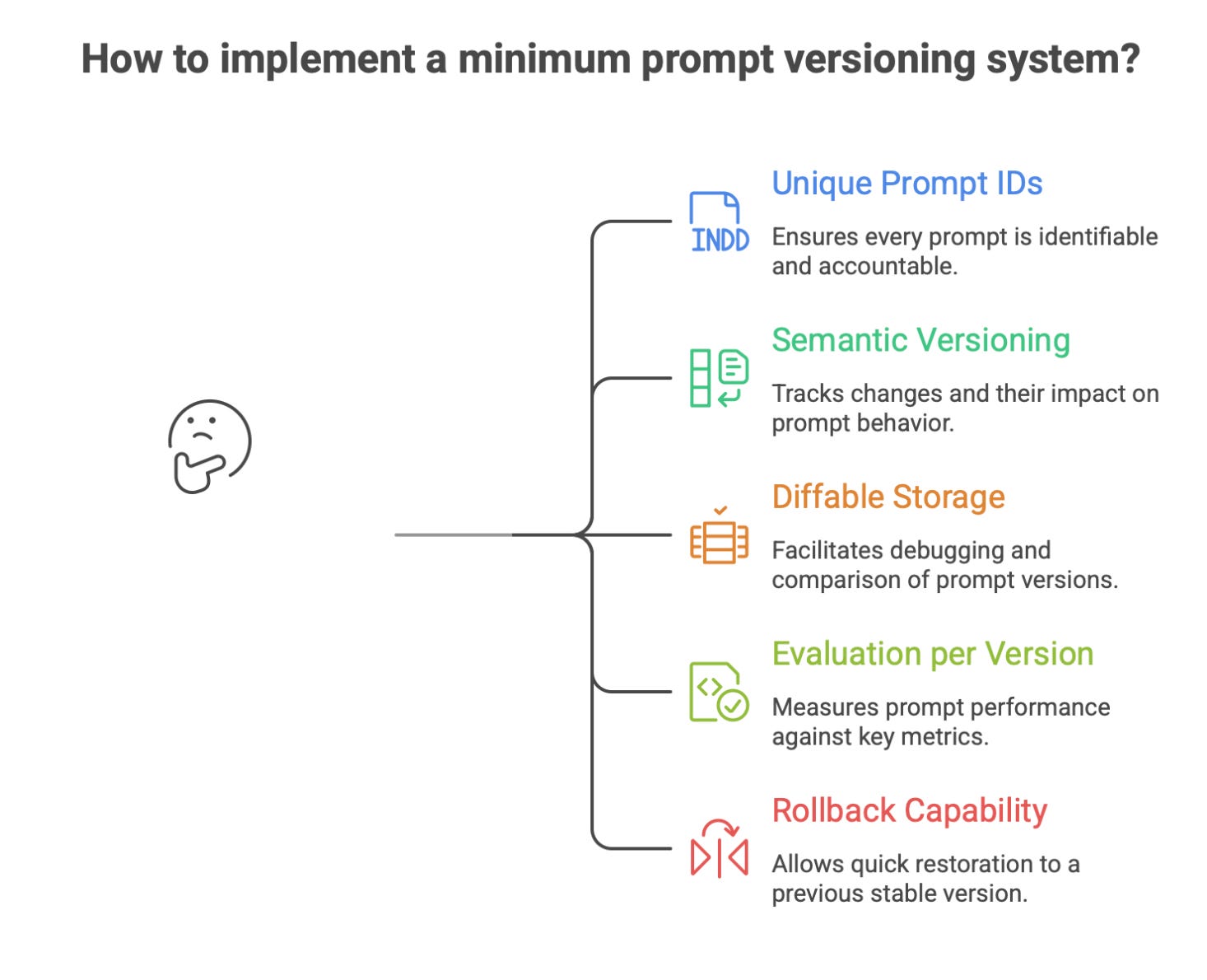
The Minimum Prompt Versioning System
You don’t need complex tooling.
You need discipline.
1 Unique Prompt IDs
Every prompt must have:
a name
an owner
a purpose
No anonymous prompts.
2 Semantic Versioning
Use real versions:
v1.0.0 - baseline
v1.1.0 - behavior change
v1.1.1 - formatting fix
If behavior changes, minor versions must change.
3 Diffable Storage
Prompts must live where diffs are visible:
Git
prompt registries
config repos
If you can’t diff it, you can’t debug it.
4 Evaluation per Version
Every prompt version must be evaluated against:
baseline accuracy
hallucination rate
refusal behavior
Example eval table:
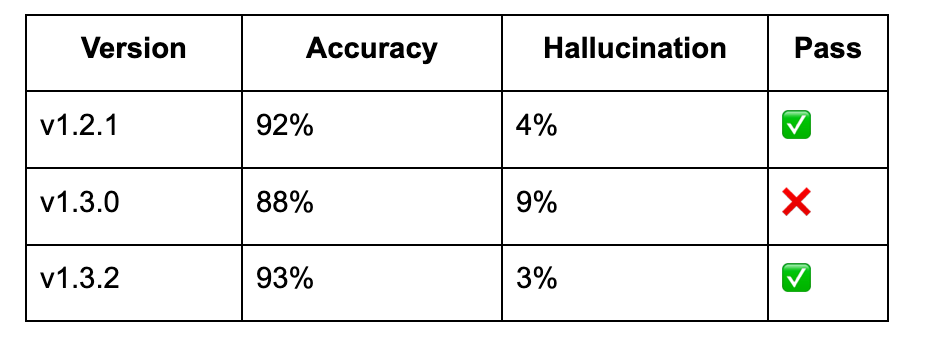
No eval = no release.
5 Rollback Capability
Prompt rollback should be:
one config change
not a rewrite
not a guess
If rollback takes more than minutes,
your system is fragile.
Prompt Versioning in Multi-Agent Systems
In agentic systems:
prompts interact
reasoning compounds
failures cascade
A single prompt change in:
planner
executor
evaluator
can destabilize the entire system.
Without versioning:
root cause analysis becomes impossible
agent behavior feels “random”
trust collapses internally
Prompt Drift vs Prompt Decay
Two different problems teams confuse:
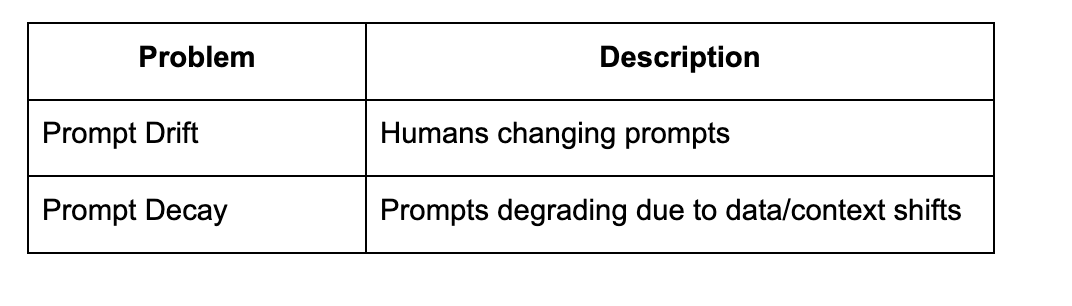
Versioning helps detect drift.
Evals + monitoring help detect decay.
You need both.
Who Should Own Prompt Versioning?
Not:
“whoever touched it last”
Ownership must be explicit.
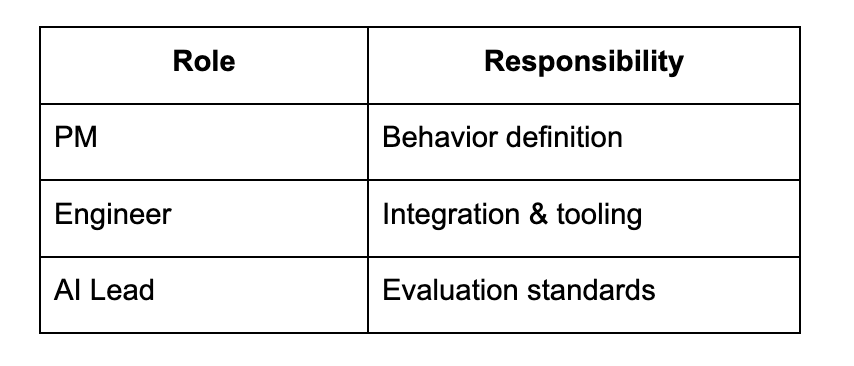
Prompt versioning is cross-functional, like APIs.
Why This Practice Separates Mature Teams From Everyone Else
Immature AI teams say:
“The model is inconsistent.”
Mature teams say:
“Prompt v1.4.0 regressed faithfulness by 6%.”
That difference is everything.
Because the second team:
knows what broke
knows when it broke
knows how to fix it
The first team debates opinions.
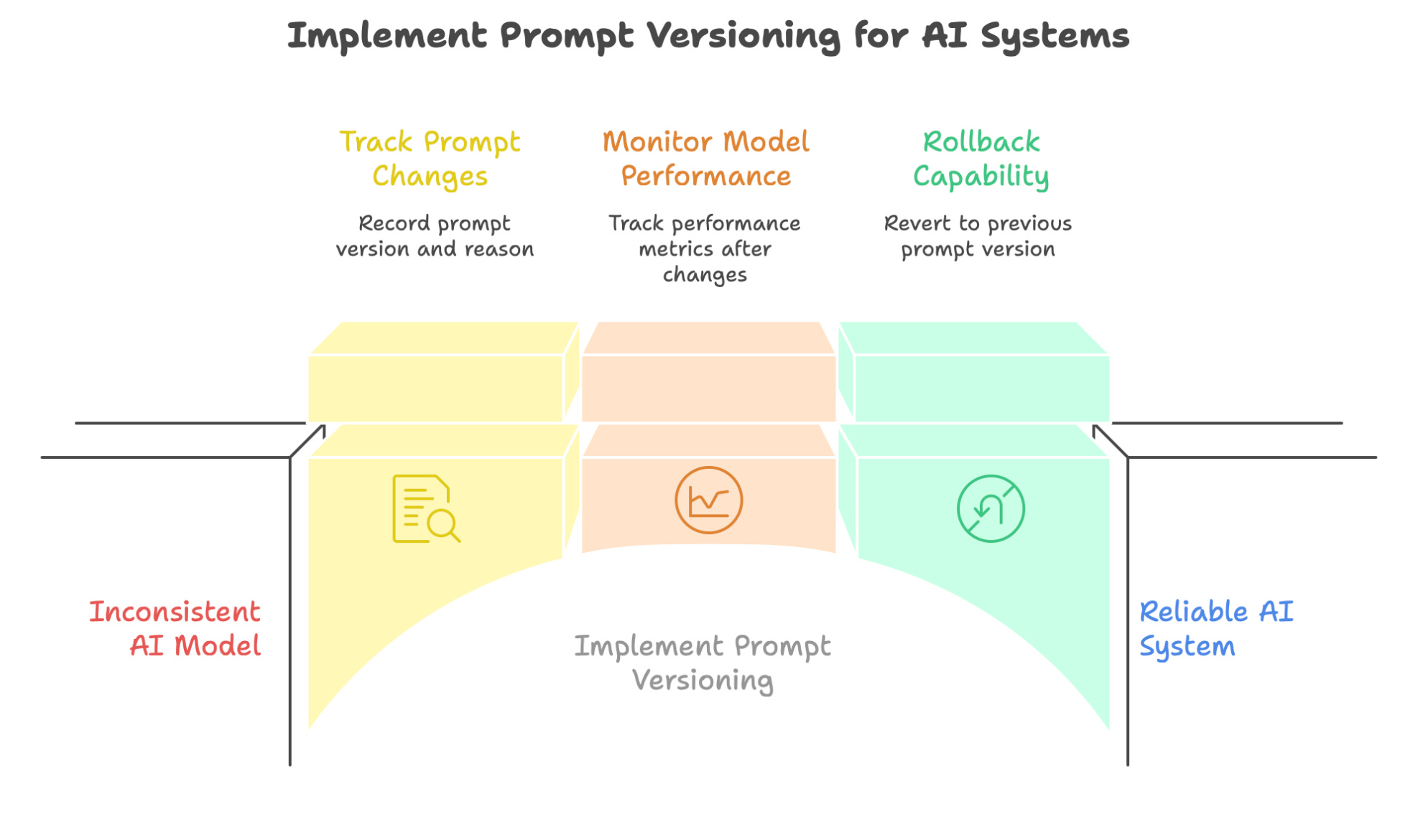
AI systems don’t become unreliable because models are unpredictable.
They become unreliable because logic changes are invisible.
Prompts are logic.
And logic without versioning is technical debt.
If your team cannot answer:
which prompt version is live
why it was changed
what behavior it altered
how to roll it back
Then you don’t have an AI system.
You have a demo held together by hope.
Prompt versioning is not a nice-to-have.
It is the missing DevOps practice in AI teams.
And teams that adopt it early
will ship faster, safer, and with far less drama.