
Why Traditional Chatbots Are Dead: AI Agents Are Replacing Them
How agentic systems are turning conversations into outcomes

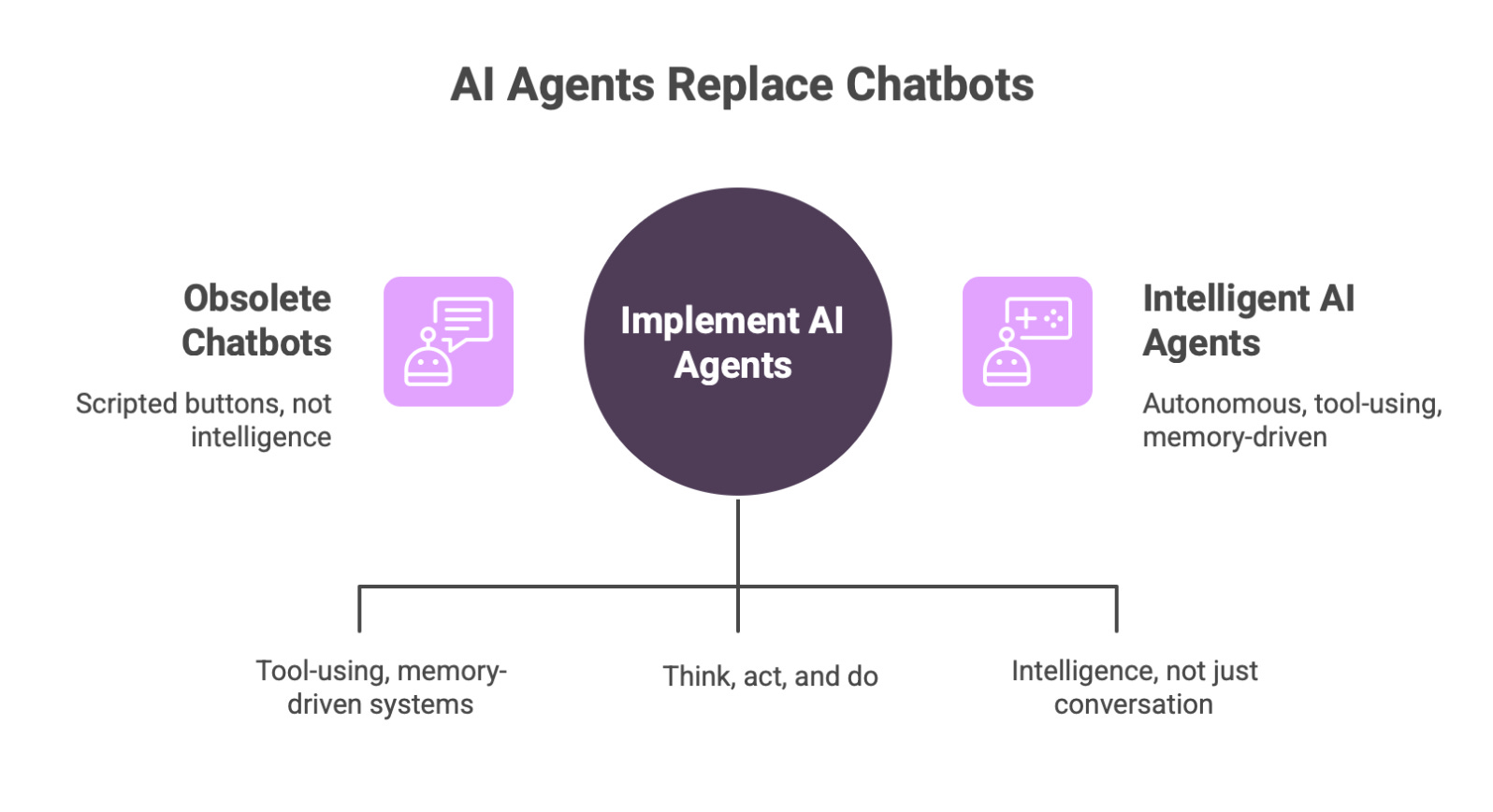
The chatbot era is ending and a new class of autonomous, tool-using, memory-driven agents is taking over.
For a decade, chatbots ruled the conversation space.
From website pop-ups to customer support flows,
chatbots were the visible interface of automation.
They promised:
instant replies
lower support costs
conversational UX
But the truth?
Most chatbots were nothing more than scripted buttons
masquerading as intelligence.
They were rule engines, not reasoning systems.
They could talk but never think.
They could reply but never act.
They could ask but never do.
And as AI evolved, the gap between expectation and reality exploded.
2026 is the year the industry finally admits:
The traditional chatbot is obsolete.
AI agents have replaced it not conceptually, but operationally.
The conversational front-end was never the goal.
Intelligence was.
And now that intelligence exists,
chatbots look embarrassingly primitive.
The Problem With Traditional Chatbots Was Never UX - It Was Architecture
Most chatbot failures can be explained by one architectural truth:
Chatbots were designed to mimic conversation,
not to create outcomes.
Even the best legacy chatbots:
followed if-else decision trees
relied on keyword matching
used structured flows
broke under deviation
forgot everything
couldn’t reason
couldn’t search
couldn’t execute tools
They were front-end wrappers around static logic.
Cosmetic automation.
Not intelligence.
The Modern User Doesn’t Want Chat - They Want Completion
Users no longer search for:
“answers”
or “responses”
or “conversations”
They want:
documents written
data analyzed
code fixed
campaigns built
insights extracted
workflows executed
The chatbot could never do that.
LLM agents can.
Why AI Agents Break the Old Paradigm
Agentic systems introduce three capabilities
that chatbots fundamentally lack:
1 autonomous decision loops
Agents don’t give one answer
they continue working until the task succeeds.
2 tool execution
Agents call APIs, write files, run code, push actions.
3 memory
Agents store and recall context over time:
minutes - hours - days - weeks
This moves AI from:
conversation interface - digital employee
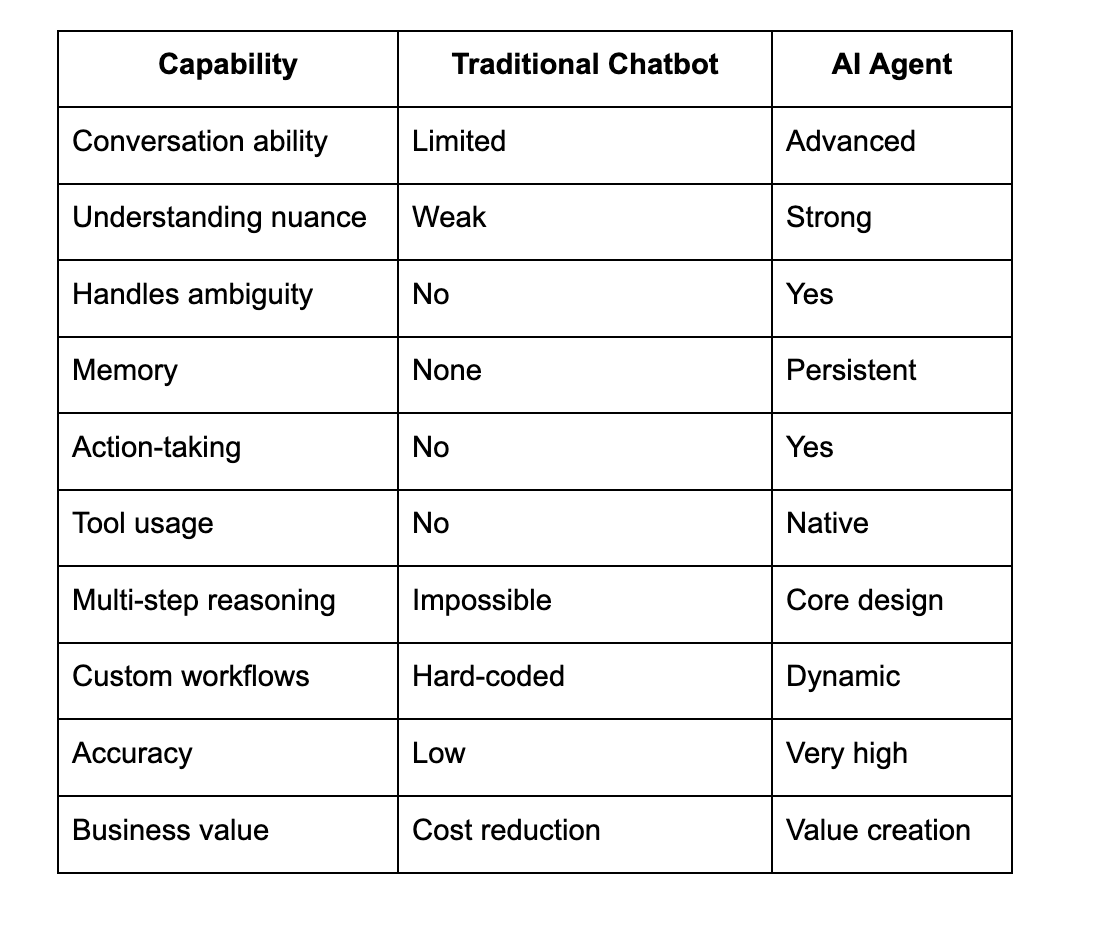
Chatbot vs AI Agent Reality
The Failure of Chatbots Was Predictable
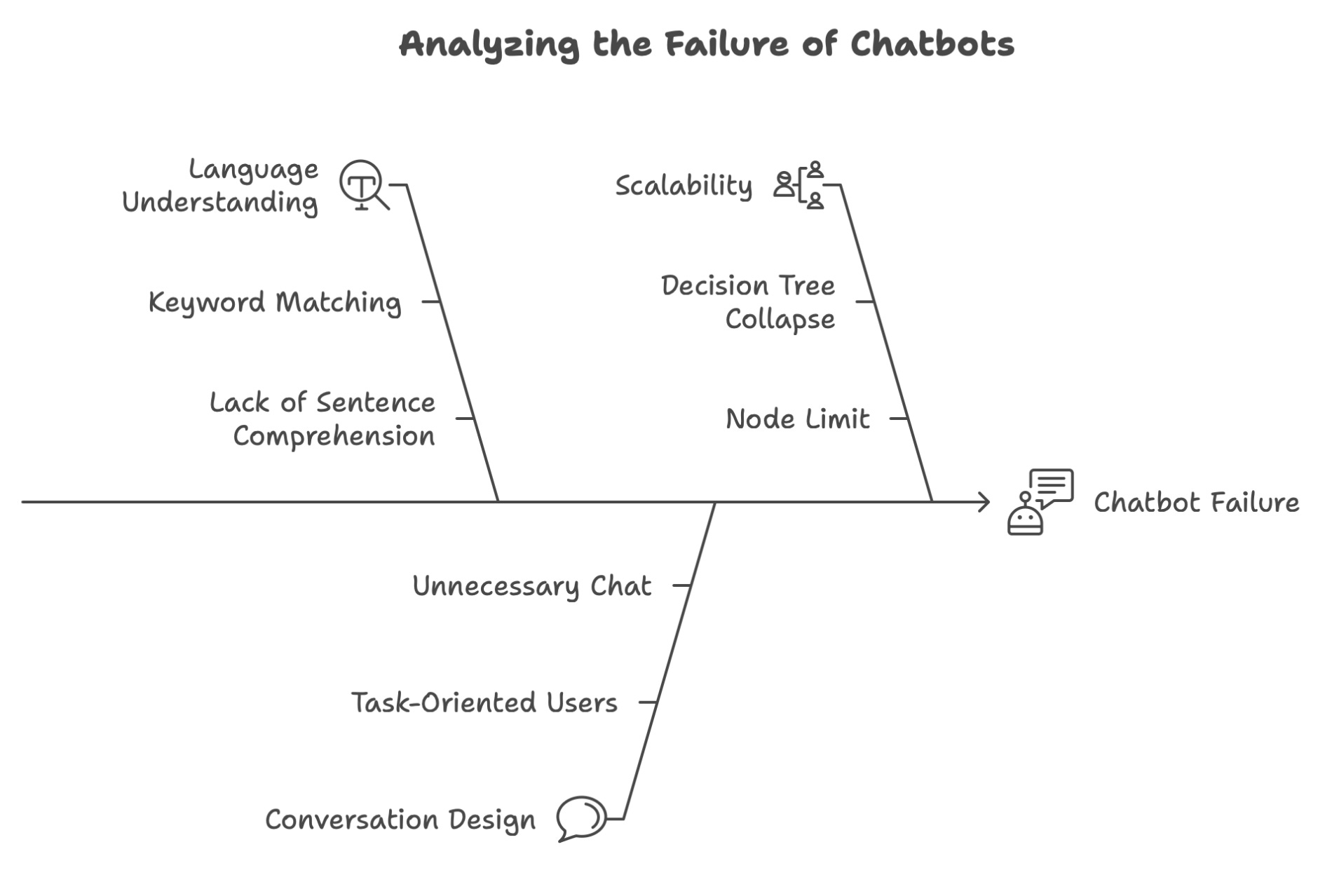
They were built on three incorrect assumptions:
❌ assumption #1: language understanding = keywords
chatbots never understood sentences
they matched tokens.
❌ assumption #2: conversation = outcome
users don’t want to chat;
they want tasks done.
❌ assumption #3: trees scale
decision trees collapse exponentially after 50 nodes.
No matter how much UI sugar companies added,
the core design was doomed.
AI Agents Introduce Intelligence as a Loop, Not a Button
Chatbots:
input → response
AI Agents:
goal → plan → act → observe → reflect → improve → loop
The loop is where intelligence lives.
The loop is why agents win.
The loop is why chatbots collapse.
Why Agents Replace Chatbots
Chatbot (Dead Stack)
┌──────────────┐
│User Prompt │
│→ Static Flow │
│→ Reply │
└──────────────┘
Agentic AI (New Stack)
┌──────────────┐
│User Goal │
│→ Planner │
│→ Tool Calls │
│→ Memory │
│→ Evaluator │
│→ Results │
└──────────────┘
Chat is optional.
Completion is mandatory.
Why Memory Breaks Chatbot Architecture
Chatbots have no:
long-term identity
history awareness
progressive state
Agents:
store user preferences
store domain knowledge
track intermediate results
resume tasks days later
This makes them project engines, not chat interfaces.
Code Example - Agent vs Chatbot Thinking
Traditional chatbot logic:
if “refund” in user_input:
send(”Please provide order number”)
Agentic logic:
goal = “process refund”
steps = agent.plan(goal)
for step in steps:
agent.execute(step)
agent.complete()
The difference?
One waits. One works.
Why Chatbots Couldn’t Scale Enterprise
Enterprises tried for 8 years to deploy chatbots at scale.
Most failed.
Reasons:
every flow needed human authorship
scripts required maintenance
domain data constantly changed
responses became generic
customization died
exceptions exploded
Agents remove that burden:
the system thinks.
Why Retrieval + Agents Break the Chatbot Ceiling
Agents can:
search documents
verify evidence
ground claims
cite sources
Chatbots cannot.
This is why agents are powering:
research copilots
financial copilots
internal knowledge copilots
legal copilots
Chatbots never could.
Why Enterprise Leaders Want Agents, Not Chatbots
Executives don’t want “conversation UI.”
They want:
automation margins
workflow acceleration
data intelligence
outcome accountability
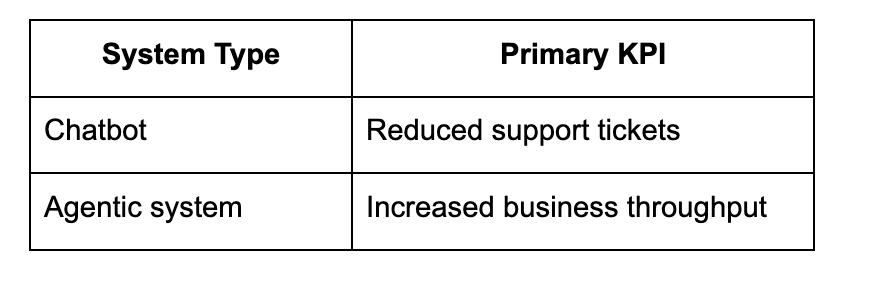
Chatbots reduce human headcount.
Agents increase output capacity.
Different value proposition entirely.
What Each System Optimizes
This changes everything.
The Death of Chatbots Is Already Visible
Industry signals:
Intercom - agent framework
ServiceNow - autonomous ops
Salesforce - autonomous cloud
Microsoft - Copilot Studio (agent layer)
OpenAI - tool & memory agents
HubSpot - agent workflows
Zendesk - agent mode
No major AI company is betting their future on chatbots.
From UI Layer - Intelligence Layer
Chatbots were UI sugar on top of databases.
Agents are architecture layers that sit inside workflows.
Chatbot UX:
“how may I help?”
Agent UX:
“I completed your task.”
Why Users Don’t Want Conversation Anymore
We are entering a searchless world:
ask for marketing campaign
not how to do one
ask for code patch
not explanation
Conversation is not the product.
Outcome is.
Future Prediction - Chatbots Become Hollow Shells
Over the next 18 months:
chatbots will become:
thin UX shells on top of agents
basic messaging shells
wrappers for agent pipelines
nothing more
Their identity disappears.
Agents become the value core.
The Irony: Agents Don’t Even Need Chat
Agents can run headless:
cron schedule
daemon mode
event triggered
data triggered
Conversation becomes optional.
Automation becomes default.
Why This Matters: Chat Was a Distraction
The industry focused on talking machines.
But intelligence isn’t talking.
Intelligence is problem solving.
Chatbots solved conversation.
Agents solve reality.
Chatbots had a decade.
It was useful.
It showed us what humans wanted.
But we now know:
conversation isn’t the destination.
autonomy is.
Traditional chatbots are dead
buried under their own architectural limits.
The future belongs to:
agent loops
tool execution
memory systems
planning graphs
autonomous goal completion
We’re not building chat interfaces anymore.
We’re building digital workers.
And when people look back,
they’ll see this moment clearly:
the end of the chatbot era
was the birth of the agentic AI era.
What’s really dying here isn’t the chatbot — it’s the idea that intelligence lives at the interface. Once completion replaces conversation as the unit of value, UX becomes secondary to loop design, state management, and decision authority. Agents win not because they “act,” but because they persist.